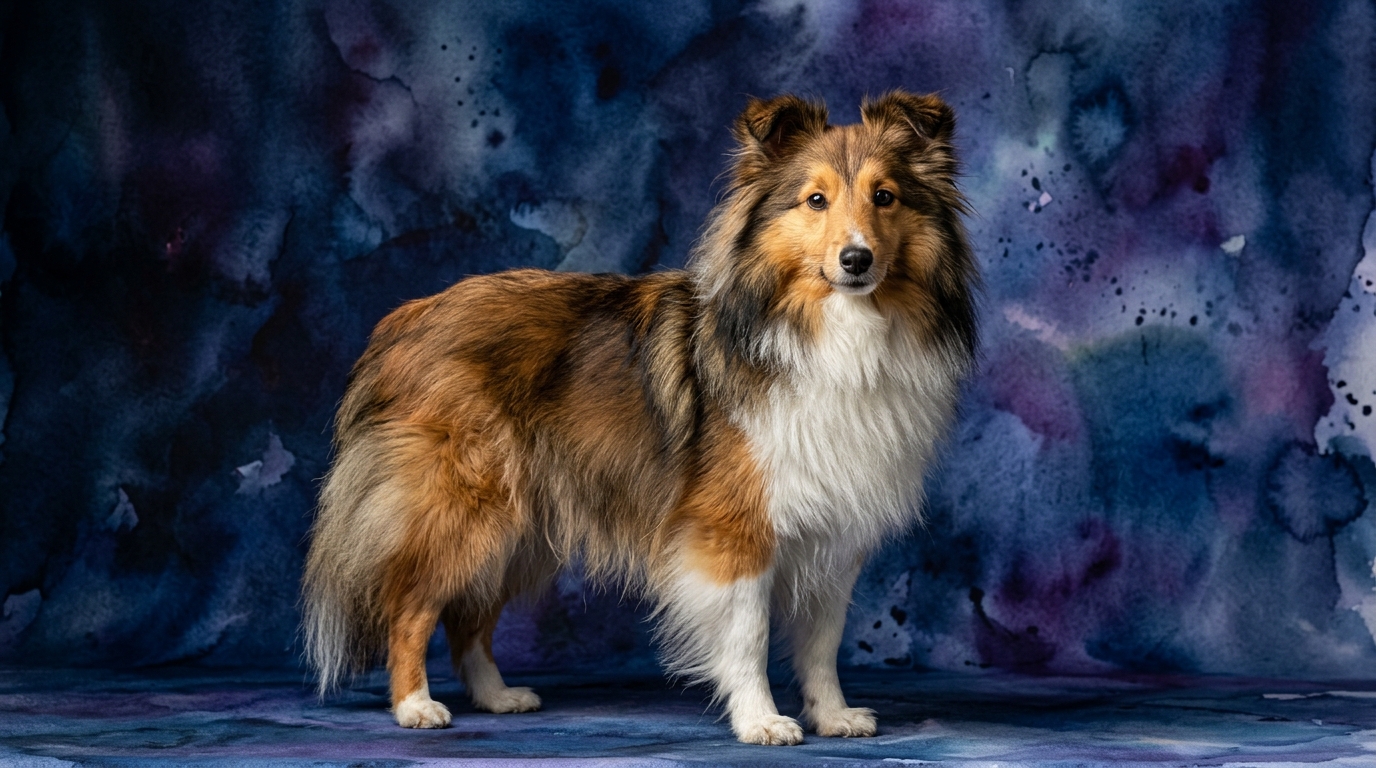
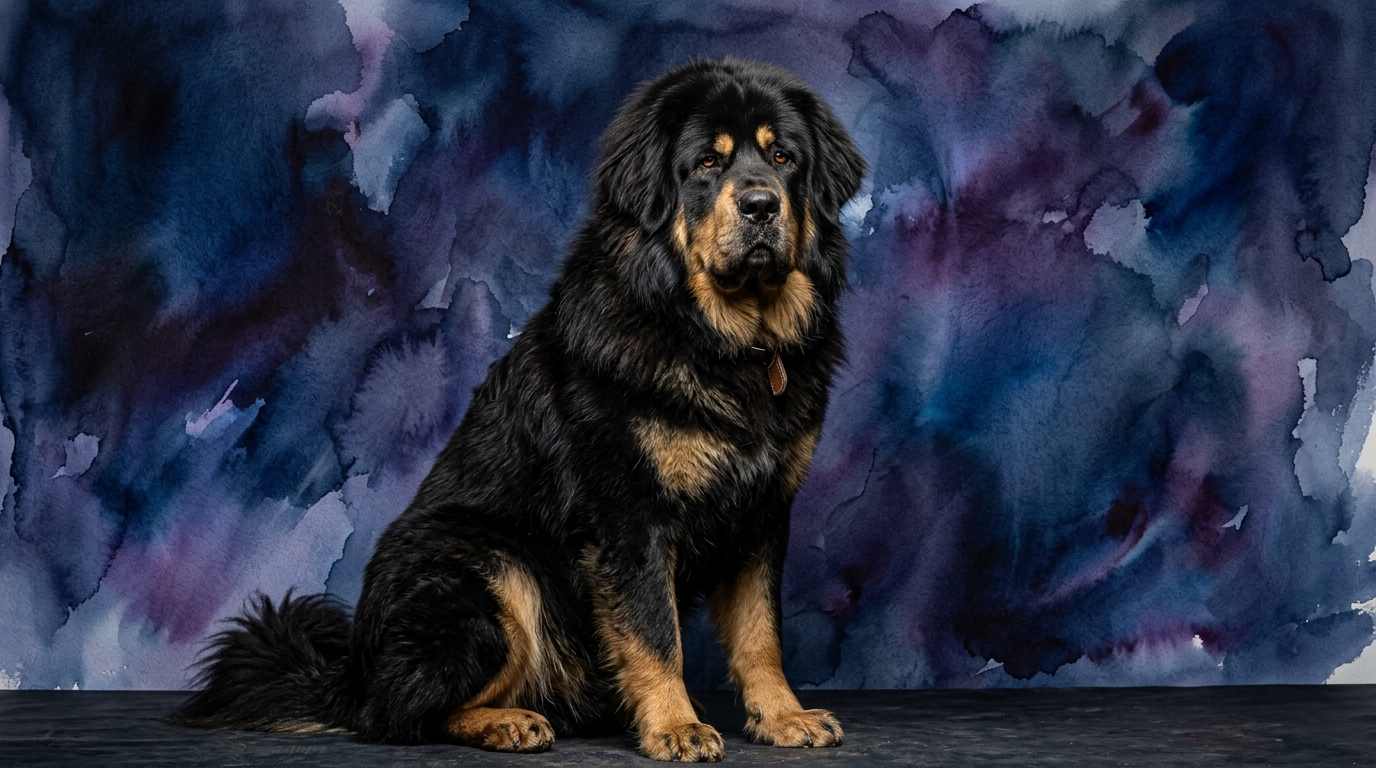
Side-by-Side Cognitive Profile: Sheltie vs. Tibetan Mastiff
The Cosmic Pet Pet IQ Lab employs a five-dimensional framework to assess canine intelligence, offering a nuanced view beyond simple obedience. For the Shetland Sheepdog, a breed ranked #6 by Coren, its profile reflects a highly responsive and adaptable mind: Problem Solving 4/5, Training Speed 5/5, Social Intelligence 4/5, Instinctive Drive 5/5, and Memory 5/5. These scores paint a picture of a dog engineered for intricate, cooperative tasks, readily absorbing new information and commands.
In stark contrast, the Tibetan Mastiff, a powerful Working breed not included in Coren’s ranking, exhibits a cognitive profile geared towards independent guardianship rather than collaborative work. Its scores are consistently moderate: Problem Solving 3/5, Training Speed 3/5, Social Intelligence 3/5, Instinctive Drive 3/5, and Memory 3/5. This suggests a dog that processes information at its own pace, relies on self-sufficiency, and is less inclined towards immediate human direction, instead prioritizing its innate protective instincts.
Where the Shetland Sheepdog Excels Cognitively
The Shetland Sheepdog's cognitive advantages are evident across the board, particularly in its capacity for rapid learning and complex task execution. With a Training Speed of 5/5 and Memory of 5/5, Shelties grasp new commands and routines with remarkable efficiency, retaining them over long periods. This allows for extensive training in obedience, agility, and other dog sports, where they consistently demonstrate precise execution and quick reactions.
Their Problem Solving score of 4/5 highlights an ability to navigate novel situations and figure out solutions, often through trial and error or by applying learned concepts. Coupled with a Social Intelligence of 4/5, Shelties are adept at reading human cues and adapting their behavior accordingly, making them highly communicative and responsive companions. Their Instinctive Drive of 5/5 is channeled into a strong desire to work and please, making them eager participants in any mental or physical challenge presented by their owners.
Where the Tibetan Mastiff Demonstrates Unique Strengths
While the Tibetan Mastiff’s cognitive scores are not as high as the Sheltie's, they reflect a distinct set of strengths optimized for its historical role as a formidable guardian. Its Problem Solving score of 3/5, while not indicative of rapid innovation, points to a deliberate and often effective approach to assessing threats and maintaining security. This breed is not easily flustered and will methodically evaluate situations, relying on its judgment rather than immediate intervention.
The Tibetan Mastiff's Instinctive Drive of 3/5 is intensely focused on protection of its territory and family, manifesting as an unwavering watchfulness and independent decision-making. This means it often doesn't require constant direction to perform its guardian duties; it operates on an internal compass. Its moderate Social Intelligence (3/5) means it can discern friend from foe and understand family dynamics, but it typically maintains a dignified reserve with strangers, prioritizing observation over effusive interaction. Its Memory (3/5) is sufficient for remembering established boundaries and individuals, reinforcing its consistent protective stance.
Training Dynamics: Sheltie's Eagerness vs. Mastiff's Independence
The difference in training ease between these two breeds is substantial and directly linked to their cognitive profiles. The Shetland Sheepdog, with its 5/5 Training Speed and 5/5 Instinctive Drive, is generally a dream to train. They possess an innate desire to understand and comply, thriving on positive reinforcement and mental engagement. Their sharp memory ensures commands are learned quickly and retained, making them excellent candidates for advanced obedience, trick training, and competitive dog sports. They often anticipate cues and are eager to participate, making training sessions enjoyable and productive.
Conversely, the Tibetan Mastiff’s Training Speed of 3/5 and its independent Instinctive Drive of 3/5 mean a different approach is necessary. These dogs are not inherently driven to please in the same way a Sheltie is; they are thinkers who weigh commands against their own judgment. Training a Tibetan Mastiff requires immense patience, consistency, and a strong, trust-based bond. They respond best to clear, fair leadership and positive reinforcement, but they will not be rushed and may choose to comply at their own pace. Owners must understand that while they can be trained, they will always retain a degree of self-sufficiency and may not perform tasks with the Sheltie's enthusiastic compliance.
Matching Canine Cognition to Owner Lifestyles
The distinct cognitive profiles of the Shetland Sheepdog and Tibetan Mastiff naturally align with different owner lifestyles. The Sheltie, with its high problem-solving capacity, rapid training speed, and strong desire for engagement, is perfectly suited for active owners who relish mental stimulation and cooperative activities with their dog. These are individuals who enjoy dog sports, advanced obedience, or simply spending significant time teaching new skills and reinforcing good behavior. A Sheltie thrives on having a 'job,' whether it's herding, agility, or simply being an attentive companion involved in daily routines.
The Tibetan Mastiff, on the other hand, is a better fit for relaxed owners who appreciate a steadfast, independent presence and are prepared for a less overtly demonstrative companion. These owners value a dog that can make its own judgments regarding security and is content to observe rather than constantly seek interaction. They should be prepared for a dog that requires patient, consistent training and socialization from an early age, but ultimately offers a deep, if reserved, loyalty. Owners who prefer a dog that is a constant participant in high-energy activities might find the Mastiff's deliberate pace and independent nature less fulfilling.
The Verdict
Choose a Shetland Sheepdog if you desire an agile, highly trainable companion eager for mental challenges and cooperative activities, thriving on constant engagement and learning.
Opt for a Tibetan Mastiff if you seek a majestic, independent guardian with a reserved demeanor, valuing a steadfast presence and willing to invest in patient, trust-based training.
🧠 Find Your Pet's IQ Score
Our Pet IQ Lab assessment covers 25+ tests across 5 cognitive dimensions — personalized to your breed.
Take the Full IQ Test →Frequently Asked Questions
Do Shetland Sheepdogs need a lot of mental stimulation?
Yes, Shetland Sheepdogs, with their high problem-solving and memory scores, absolutely thrive on mental stimulation. They require regular challenges like puzzle toys, training new commands, or participating in dog sports to prevent boredom and channel their cognitive energy constructively.
Is the Tibetan Mastiff difficult to train for a first-time dog owner?
The Tibetan Mastiff's independent nature and moderate training speed can present challenges for first-time dog owners. Their strong will and self-reliance require consistent, patient training methods and a clear understanding of their guardian instincts, making them better suited for experienced individuals.
Which breed is more adaptable to different living situations based on intelligence?
The Shetland Sheepdog, with its higher social intelligence and adaptability, tends to adjust more readily to various living situations, including apartment life if exercised sufficiently. The Tibetan Mastiff's strong territorial instincts mean it generally thrives best in homes with ample space and secure boundaries.