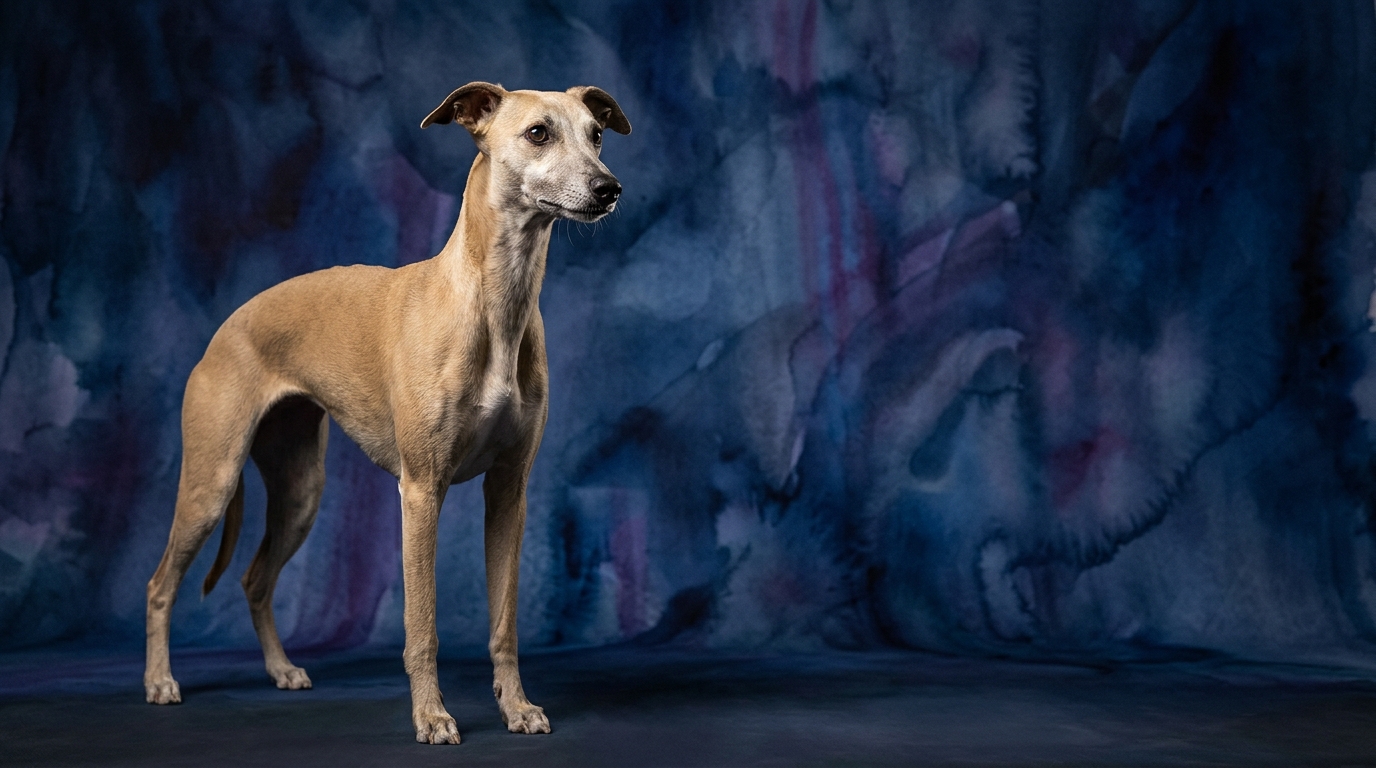
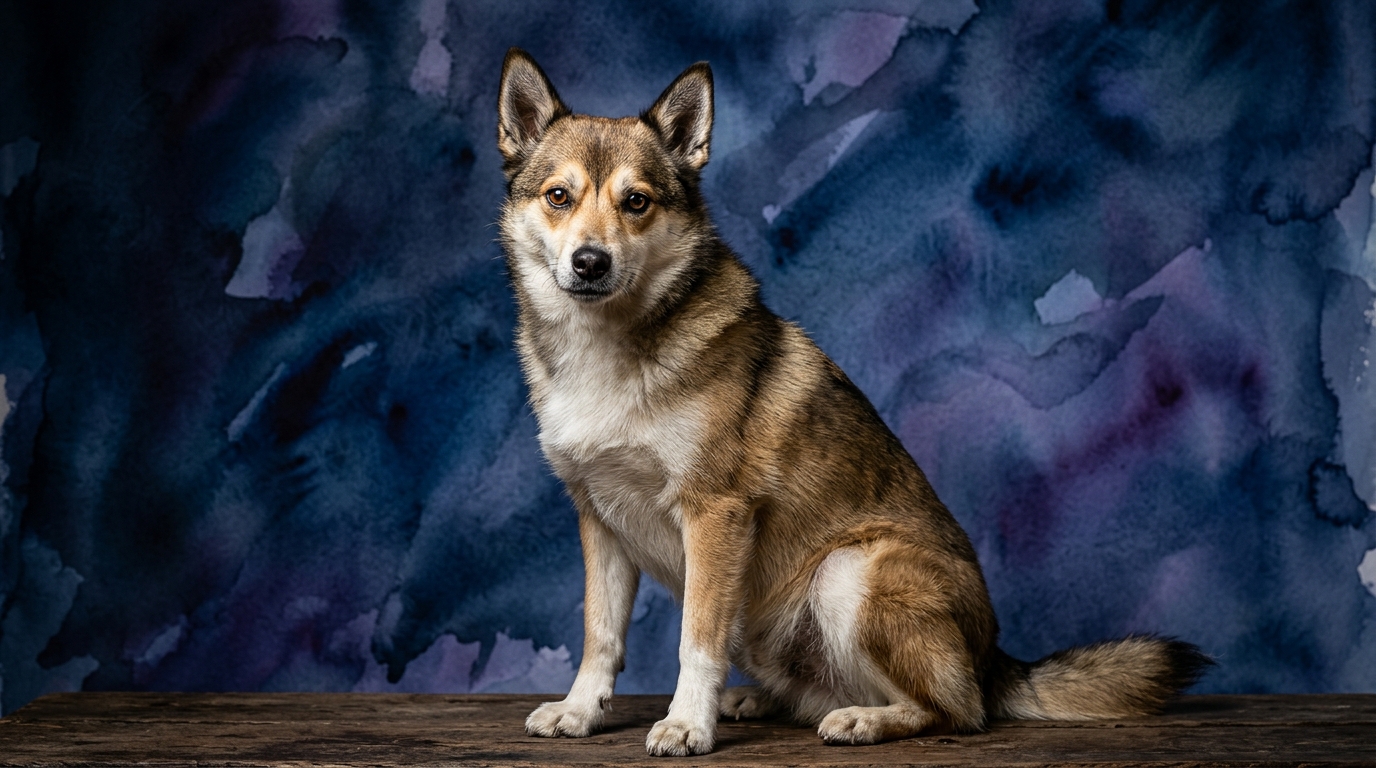
Side-by-Side IQ Profile: Whippet vs. Norwegian Lundehund
The Cosmic Pet Pet IQ Lab evaluates canine intelligence across five key dimensions, providing a nuanced understanding of each breed's mental makeup. The Whippet, a refined sighthound, holds a Coren ranking of #51, indicating a solid foundation in working and obedience intelligence. Its Problem Solving ability scores a 3/5, suggesting it can navigate common challenges and adapt to new situations with reasonable success, though it might not always devise the most inventive solutions. Training Speed for the Whippet is rated at 2/5, indicating that while capable of learning, they may take a bit longer to grasp new commands or require more repetition, often due to their independent sighthound nature. Social Intelligence shines for the Whippet at 4/5, highlighting their strong capacity to understand human emotions and cues, forming deep, empathetic bonds. Instinctive Drive is a powerful 5/5, reflecting their deeply ingrained prey drive and an inherent urge to chase, a hallmark of their sighthound heritage. Memory for the Whippet is a balanced 3/5, meaning they generally retain learned commands and routines effectively, but might not possess an exceptional recall for every single detail.
In contrast, the Norwegian Lundehund, a rare and ancient breed from the Non-Sporting Group, does not currently hold a Coren ranking, which means its specific working and obedience intelligence hasn't been as widely standardized or studied in that context. However, our IQ metrics provide a clear picture of its cognitive strengths. The Lundehund's Problem Solving ability is rated at 3/5, similar to the Whippet, indicating a practical intelligence for navigating its environment and overcoming obstacles, a trait essential for its historical role in puffin hunting. Its Training Speed is a respectable 3/5, suggesting it learns new tasks at an average pace, responsive to consistent, positive reinforcement, though it can exhibit a degree of independent thought. Social Intelligence for the Lundehund stands at 3/5; they are friendly and can bond closely with their families, but may take more time to warm up to strangers or might not display the same overt emotional attunement as some breeds. Instinctive Drive is a moderate 3/5, reflecting a balanced level of natural hunting instincts without the intense, singular focus seen in some specialized working breeds. Memory for the Lundehund is also a 3/5, showing a consistent ability to remember lessons and routines, allowing for effective communication and interaction.
Where the Whippet Wins Cognitively
The Whippet's distinct cognitive advantage lies primarily in its exceptional Social Intelligence (4/5) and unparalleled Instinctive Drive (5/5). Their high social aptitude means they are remarkably attuned to human emotions, often anticipating their owner's moods and reacting with comforting presence or playful invitations. This makes them superb companions for individuals seeking a dog that genuinely connects on an emotional level, often displaying a quiet empathy. Furthermore, their powerful instinctive drive isn't just about chasing; it represents a highly focused, persistent energy that can be channeled into activities like lure coursing, where their natural talents are fully expressed. This intense drive, while requiring careful management in everyday situations, means they are profoundly motivated by specific, instinct-driven tasks, leading to breathtaking displays of speed and agility that few other breeds can match. This cognitive blueprint makes them particularly adept at activities requiring bursts of focused, instinctual action and deep emotional connection.
Where the Norwegian Lundehund Wins Cognitively
The Norwegian Lundehund's cognitive strengths emerge from its unique historical role, particularly in its more balanced Training Speed (3/5) compared to the Whippet, and its practical Problem Solving (3/5) interwoven with its distinctive physical adaptations. While their problem-solving score is numerically similar to the Whippet's, the Lundehund's problem-solving is often manifested in a different, more physical and exploratory way, reflecting their heritage of navigating treacherous cliffs and crevices to hunt puffins. This suggests an inherent curiosity and resourcefulness in novel physical environments. Their slightly higher Training Speed indicates a more consistent responsiveness to learning new commands, often making them a bit more predictable in structured training sessions. This breed's moderate instinctive drive also means they are less likely to be overwhelmed by a single, all-consuming urge, allowing for a broader range of interests and a more adaptable approach to daily life. Their cognitive profile suggests a dog that is consistently capable and less prone to extreme behavioral tendencies in any one area.
Which is Easier to Train and Why?
When considering ease of training, the Norwegian Lundehund (Training Speed 3/5) generally presents a slightly more straightforward experience than the Whippet (Training Speed 2/5). Whippets, despite their social intelligence, possess a profound independence characteristic of sighthounds. Their intense instinctive drive means that in environments with tempting distractions, like a squirrel darting across a field, their innate urge to chase can swiftly override learned commands, making consistent recall a significant challenge without extensive, dedicated training. They are not necessarily disobedient, but their internal motivation system prioritizes pursuit. Conversely, the Lundehund's moderate training speed and less overwhelming instinctive drive suggest they might be more consistently receptive to learning. While they can be clever and possess their own independent streak, their historical role often required them to work cooperatively, albeit uniquely, with humans. This translates to a dog that, with patient, positive reinforcement, may integrate new commands into their routine with a bit more consistency and less distraction-induced regression than their sighthound counterpart. Their problem-solving skills, honed in navigating complex terrain, can also make them quick to grasp tasks that involve spatial reasoning or manipulation.
Which Suits Active Owners vs. Relaxed Owners
The choice between a Whippet and a Norwegian Lundehund often comes down to an owner's lifestyle and how they envision integrating a dog into their daily rhythm. The Whippet, despite its reputation as a 'couch potato' indoors, is ideally suited for moderately active owners who understand and can accommodate its intense need for short, explosive bursts of exercise. Owners who enjoy activities like lure coursing, sprinting in secure areas, or even just regular, brisk walks will find the Whippet a joyful, albeit speedy, companion. Their high instinctive drive means they thrive when given outlets for their natural abilities. However, once their exercise needs are met, they transition seamlessly into a relaxed, affectionate housemate, making them surprisingly adaptable for owners who appreciate a quiet home life punctuated by energetic outdoor adventures. They are not dogs for marathon runners but for sprinters and those who appreciate calm indoors.
The Norwegian Lundehund, with its balanced instinctive drive and problem-solving abilities, is a better fit for owners who are consistently active but perhaps not seeking the same intensity of speed-based exercise. They require regular, varied activity that engages both their bodies and minds. Daily walks, hikes, and opportunities for exploration and scent work are highly beneficial. Their unique physical attributes, like extra toes and flexible joints, hint at a dog that enjoys navigating varied terrains and solving physical puzzles. Owners who appreciate a dog with a quirky personality, a moderate energy level that requires consistent engagement, and a breed that enjoys exploring its surroundings will find the Lundehund a delightful match. They are not extreme athletes, but rather inquisitive and robust companions who thrive on consistent, thoughtful interaction and exploration.
The Verdict
Choose the Whippet if you seek a deeply empathetic companion who loves to sprint in controlled environments and then relax by your side, offering profound emotional connection.
Opt for the Norwegian Lundehund if you appreciate a uniquely adaptable dog with moderate energy, a resourceful mind, and a love for varied exploration and consistent engagement.
🧠 Find Your Pet's IQ Score
Our Pet IQ Lab assessment covers 25+ tests across 5 cognitive dimensions — personalized to your breed.
Take the Full IQ Test →Frequently Asked Questions
Do Whippets need a lot of exercise despite being calm indoors?
Yes, Whippets require intense bursts of exercise daily to satisfy their high instinctive drive. While they are very calm and relaxed indoors, they need opportunities for full-speed running in a safe, enclosed area to maintain physical and mental well-being.
Is the Norwegian Lundehund a good choice for first-time dog owners?
The Norwegian Lundehund can be a good choice for dedicated first-time owners who are prepared for a breed with unique traits and an independent streak. Their moderate training speed and balanced drives make them manageable, but their need for varied mental and physical stimulation requires commitment.
How does the Whippet's high social intelligence manifest in daily life?
A Whippet's high social intelligence often means they are highly attuned to their owner's moods and body language, frequently offering comfort or initiating gentle play at opportune moments. They form strong, empathetic bonds and thrive on close interaction with their human family, often preferring physical proximity.