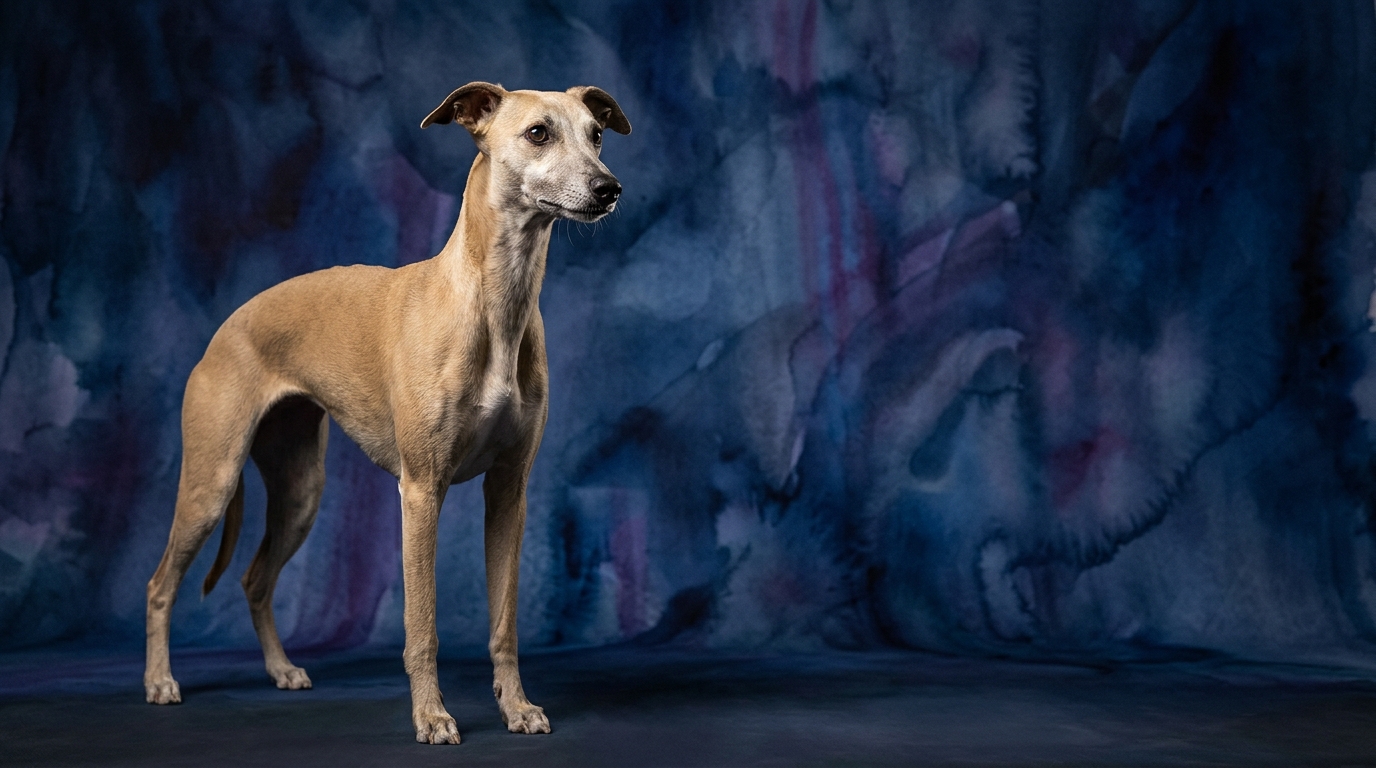
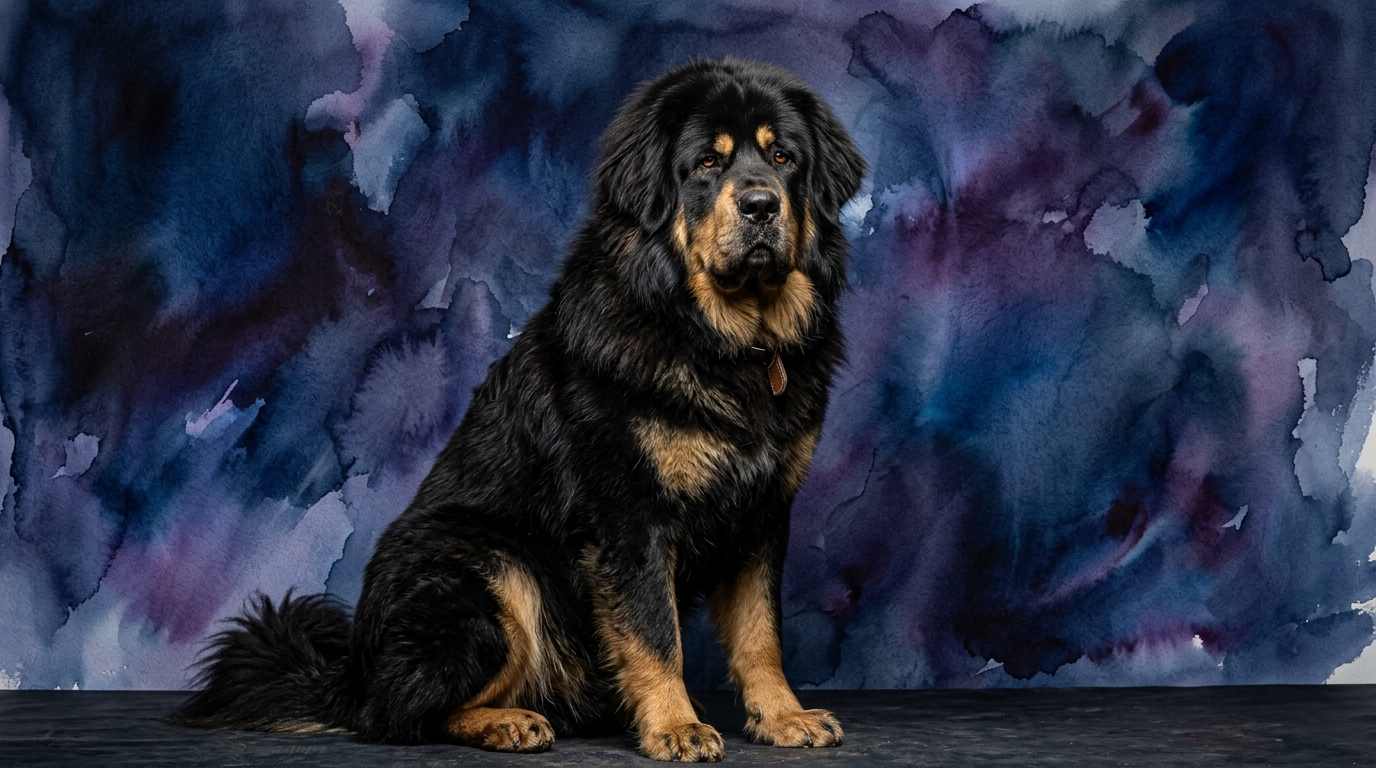
Side-by-Side IQ Profile: Whippet vs. Tibetan Mastiff
At The Cosmic Pet Pet IQ Lab, we analyze canine intelligence across five key dimensions, revealing the nuanced cognitive strengths of each breed. The Whippet, a sighthound ranked #51 by Coren, presents a profile reflecting its speed and social grace, while the unranked Tibetan Mastiff showcases the independent judgment of a formidable guardian.
For the Whippet, problem Solving registers at a moderate 3/5, indicating an ability to navigate immediate environmental challenges. Their training Speed is 2/5, suggesting a need for engaging, positive reinforcement methods to overcome their independent streak. Social Intelligence shines at 4/5, highlighting their deep sensitivity to human emotions and strong desire for companionship. An impressive instinctive Drive of 5/5 underscores their powerful chase instinct and inherent athleticism, while memory stands at 3/5, enabling them to retain routines and learned behaviors effectively.
In contrast, the Tibetan Mastiff, a working breed, also scores 3/5 for problem Solving, reflecting their capacity to assess situations, particularly within their territory. Their training Speed is slightly higher at 3/5, indicating a deliberate learning process requiring immense patience and consistent handling. Social Intelligence is 3/5; they form profound bonds with their immediate family but typically maintain a reserved demeanor towards strangers. Their instinctive Drive is 3/5, primarily manifesting as a strong territorial guardian instinct, and their memory is 3/5, allowing them to recall established boundaries crucial for their protective role.
Where the Whippet Wins Cognitively
The Whippet's cognitive strengths distinctly outshine the Tibetan Mastiff in two key areas. Their social Intelligence, rated 4/5 compared to the Mastiff's 3/5, means Whippets are generally more attuned to human emotional states and cues. This translates to an easier integration into varied social environments and a greater capacity for nuanced interaction, making them highly responsive companions who often anticipate their owner's desires. They thrive on close companionship and are generally more eager to participate in family activities, seeking out interaction rather than merely tolerating it.
Furthermore, the Whippet's instinctive Drive, scoring a perfect 5/5 against the Mastiff's 3/5, highlights their unparalleled motivation for activities involving speed and chase. This isn't just about a strong prey drive; it signifies an inherent zest for life and an intense desire to engage in physically demanding tasks that align with their sighthound heritage. This drive makes them exceptional candidates for sports like lure coursing or agility, where their natural inclinations are channelled into exhilarating performance, a level of focused, intense physical motivation not typically found in the more stoic Mastiff.
Where the Tibetan Mastiff Wins Cognitively
While the Whippet excels in social responsiveness and raw drive, the Tibetan Mastiff demonstrates a distinct cognitive advantage in areas tied to their historical guardian role. Although both breeds score 3/5 in problem Solving, the *nature* of their problem-solving differs significantly. The Tibetan Mastiff's problem-solving often involves independent assessment of perceived threats and the strategic defense of their territory, a complex cognitive process requiring judgment and self-reliance rather than seeking human direction. They are adept at discerning subtle environmental changes and reacting appropriately without explicit command, a form of practical, situational intelligence invaluable for a protector.
Additionally, while their training Speed is only slightly higher at 3/5 compared to the Whippet's 2/5, this reflects a deliberate, often deeply ingrained learning style. Once a Tibetan Mastiff understands and accepts a command or boundary, particularly if it aligns with their protective instincts or sense of order, they tend to adhere to it with unwavering consistency. Their learning might not be rapid in a trial-and-error sense, but it is thorough and enduring, making them exceptionally reliable in their established duties. This resilience in learned behavior, once accepted, gives them an edge in tasks requiring steadfast adherence and independent execution.
Which is Easier to Train and Why
When considering ease of training for the average owner, the Whippet often presents a more approachable experience, despite its lower training Speed score of 2/5 compared to the Tibetan Mastiff's 3/5. The Whippet's higher social Intelligence (4/5) means they are generally more inclined to seek human approval and are highly sensitive to their handler's mood, making them responsive to positive reinforcement and gentle guidance. While they possess an independent sighthound spirit and may become bored with repetitive drills, their desire to engage with their human companions often makes them willing participants in training sessions, especially if treats or exciting chase games are involved. Their moderate memory (3/5) ensures they retain commands, and their smaller size makes physical management during training less daunting.
The Tibetan Mastiff, conversely, is a formidable training challenge for many. Their 3/5 training Speed score reflects a deliberate, often self-directed learning process. These dogs were bred to work independently, making their compliance conditional on their own assessment of the situation and their respect for the handler. They are not typically eager to please in the same way a Whippet might be, and their sheer size and strength necessitate an experienced, confident trainer. A Tibetan Mastiff often requires more patience and a deeper understanding of their independent, protective nature. While they learn and remember (3/5 memory) what they deem important, coercing them into tasks they see as arbitrary can be exceptionally difficult. Their training demands consistency, fairness, and a bond built on mutual respect.
Which Suits Active Owners vs. Relaxed Owners
The Whippet, with its remarkable instinctive Drive (5/5), is an ideal companion for owners who lead an active lifestyle, even if that activity is concentrated into bursts. While often described as "45-mph couch potatoes" due to their calm indoor demeanor, Whippets require significant opportunities to run at full speed in a safe, enclosed area. Their innate desire to chase and sprint means they thrive with owners who can provide daily outlets for this powerful drive, whether through lure coursing, long off-leash runs, or engaging in fast-paced games. Their athleticism and need for physical exertion make them unsuitable for purely sedentary households; they need an owner who can consistently meet their high-intensity exercise requirements.
The Tibetan Mastiff, in contrast, aligns more with owners who appreciate a more relaxed, observational approach to activity. While their size necessitates space and regular, moderate walks to maintain physical condition, they are not high-energy endurance dogs. Their instinctive Drive (3/5) is primarily focused on patrolling and guarding their territory, a mental and physical activity that doesn't demand sustained high-speed exertion. They are content with a secure yard to survey and a few leisurely strolls rather than intense sprints. Owners who enjoy quiet companionship and can provide a secure, spacious environment for their dog to fulfill its natural guarding instincts without excessive physical demands would find the Tibetan Mastiff a better fit.
The Verdict
Choose a Whippet if you appreciate a sensitive, socially intelligent companion, enjoy engaging in speed-based activities, and can provide consistent, positive training to channel their chase drive.
Choose a Tibetan Mastiff if you are an experienced owner seeking a truly independent, protective companion who understands the breed's need for space, firm but fair leadership, and minimal tolerance for strangers.
🧠 Find Your Pet's IQ Score
Our Pet IQ Lab assessment covers 25+ tests across 5 cognitive dimensions — personalized to your breed.
Take the Full IQ Test →Frequently Asked Questions
Are Whippets suitable for first-time dog owners?
Whippets can be good for first-time owners who are prepared for their independent sighthound nature and high exercise needs. Their social intelligence makes them adaptable, but consistent positive training is crucial to manage their chase drive.
Do Tibetan Mastiffs require a lot of grooming?
Tibetan Mastiffs have a thick double coat that requires regular grooming, especially during their seasonal "blows," which can be extensive. Weekly brushing is generally needed, with more frequent sessions during shedding periods to prevent matting.
What is the biggest challenge in owning a Tibetan Mastiff?
The biggest challenge in owning a Tibetan Mastiff is managing their independent nature and strong guardian instincts, which necessitate extensive socialization and firm, consistent training from an early age. Their reserved nature with strangers and territorial tendencies require an experienced owner capable of responsible management and leadership.