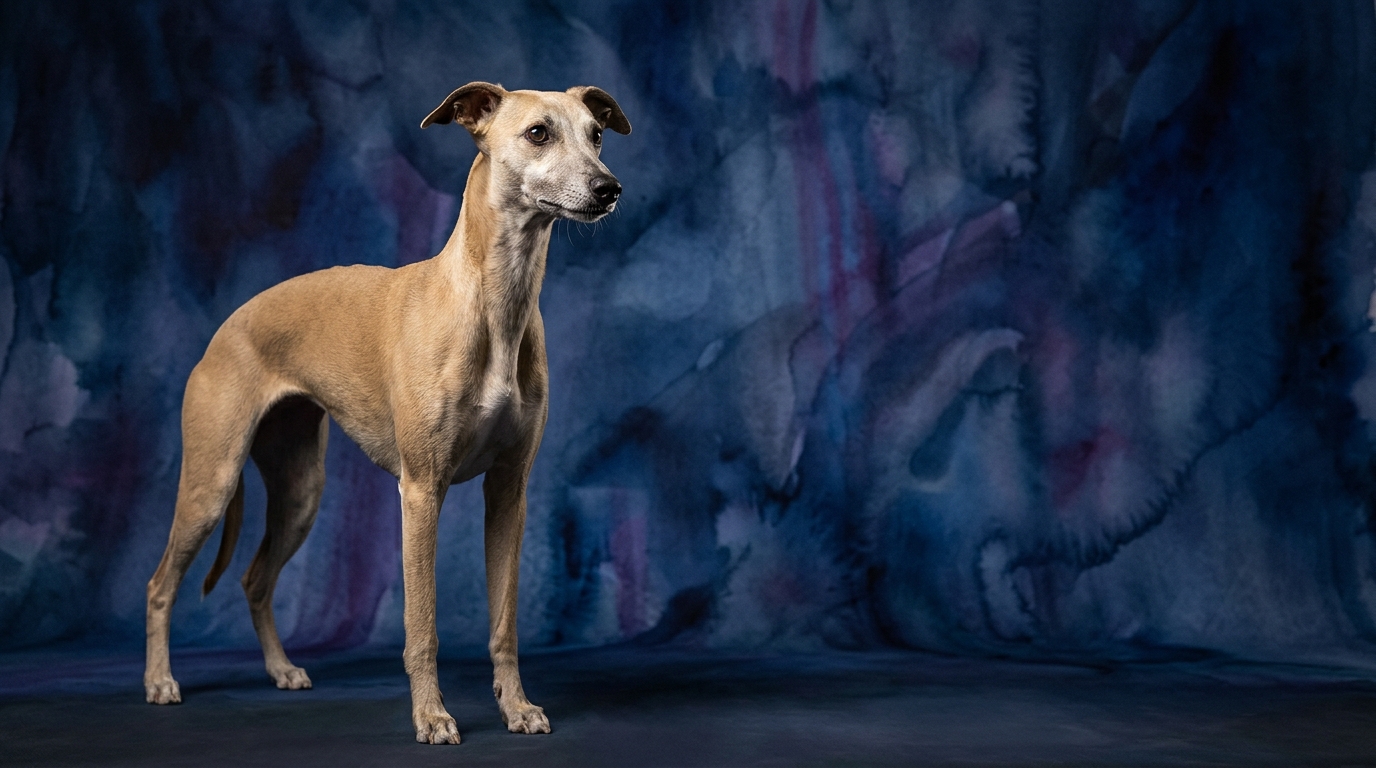
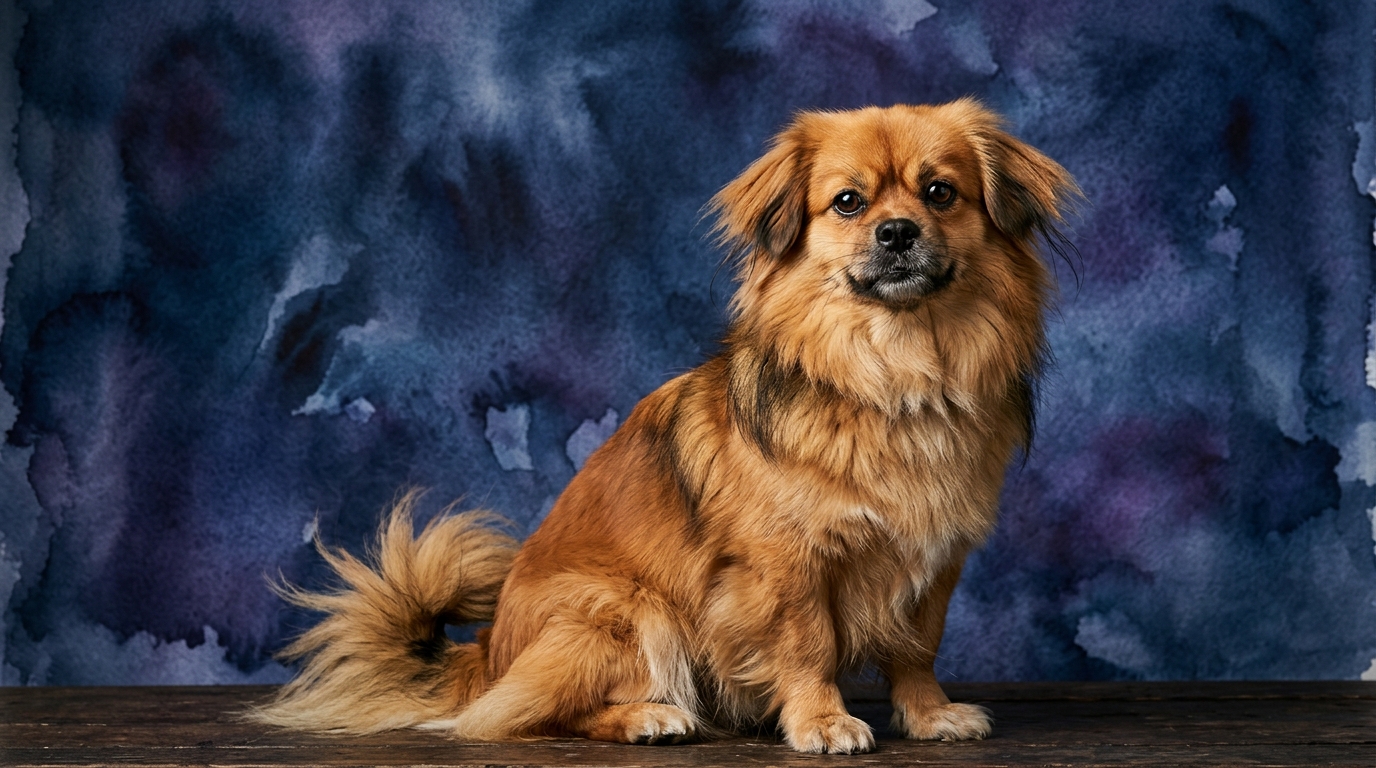
Side-by-Side Cognitive Profiles: Whippet vs. Tibetan Spaniel
At The Cosmic Pet Pet IQ Lab, we evaluate canine intelligence across five key dimensions to provide a comprehensive understanding of each breed's cognitive landscape. While the Whippet holds a Coren rank of #51, the Tibetan Spaniel is not Coren-ranked, yet our detailed assessment reveals their distinct mental aptitudes.
The Whippet's cognitive profile paints a picture of a sensitive sighthound with a powerful inherent drive. Their Problem Solving is rated 3/5, indicating a moderate ability to navigate challenges, often leaning towards efficiency rather than intricate strategizing. Training Speed is 2/5, reflecting a degree of independence and a need for consistent, engaging methods to solidify learning. Where they truly shine is in Social Intelligence, scoring a high 4/5, demonstrating a profound attunement to human emotions and social cues. Their Instinctive Drive is an exceptional 5/5, a hallmark of their sighthound heritage, signifying an intense, hardwired urge to detect and pursue motion. Memory stands at 3/5, a solid capacity for recalling routines and experiences.
The Tibetan Spaniel presents a balanced cognitive makeup, suited to their historical role as companion and 'little lion' watchdogs. Their Problem Solving ability is 3/5, suggesting a similar moderate capacity to figure out novel situations or puzzles, often through observation and a bit of persistence. Training Speed is 3/5, indicating an average responsiveness to learning, generally amenable to positive reinforcement, though they possess their own moments of stubbornness. Social Intelligence is 3/5, demonstrating strong bonds with their family and a discerning nature towards strangers, with a moderate understanding of pack dynamics. Instinctive Drive is 3/5, manifesting as a moderate watchdog instinct and curiosity, rather than a specialized working drive. Memory, like the Whippet, is also 3/5, showing a reliable capacity for learned behaviors and associations.
Where the Whippet Wins Cognitively
The Whippet's cognitive strengths distinctly lie in two areas: their profound social intelligence and their unparalleled instinctive drive. Scoring a 4/5 in Social Intelligence, Whippets exhibit a remarkable capacity for empathy and attunement to their human companions. This isn't just about being affectionate; it's an intuitive understanding of subtle emotional shifts, often anticipating needs or moods, fostering a deep, empathetic connection that few breeds can match.
Furthermore, their 5/5 Instinctive Drive is a cognitive marvel shaped by centuries of selective breeding. This isn't merely a physical urge to run; it's a highly refined cognitive apparatus for detecting the slightest movement, assessing speed and trajectory, and initiating pursuit. This drive fundamentally shapes how a Whippet perceives its environment, making them intensely focused on visual stimuli and demonstrating an innate understanding of the dynamics of motion that is a core part of their mental landscape.
Where the Tibetan Spaniel Wins Cognitively
The Tibetan Spaniel carves its cognitive niche primarily through its more balanced Training Speed, scoring a 3/5 compared to the Whippet's 2/5. This indicates a slightly greater inherent willingness to engage with directed learning tasks and a generally more cooperative disposition during training sessions. While not exceptionally quick, their responsiveness suggests they are often more focused on handler cues without the strong, inherent distractions that can plague sighthounds.
Their moderate Instinctive Drive (3/5) also contributes to this advantage; without an overwhelming prey drive, they are less likely to be completely consumed by external stimuli like a scurrying squirrel or distant movement. This allows for a more consistent focus on their human during learning activities, making them potentially more straightforward to teach basic obedience and house manners in varied environments.
Training Dynamics: Which Breed is More Amenable?
When it comes to ease of training, the Tibetan Spaniel generally holds an advantage due to its 3/5 Training Speed. These charming companions often possess a desire to please their family, responding well to consistent, positive reinforcement methods. While they can exhibit a spirited independence, it's typically less pronounced and more easily navigated than the focused independence of a sighthound. Their moderate instinctive drive means they are generally less prone to being entirely distracted by environmental factors, allowing for more sustained attention during training sessions.
The Whippet, with its 2/5 Training Speed, can present a greater challenge for novice trainers or those unprepared for their unique cognitive wiring. Their sighthound independence, coupled with a powerful 5/5 Instinctive Drive, means their focus can be easily diverted by visual stimuli. While they are capable of learning quickly if properly motivated, consistency is paramount, and handlers must understand that their inherent drive to chase is a deeply ingrained cognitive function. Recalling a Whippet off-leash in an open field, for instance, can be a significant training hurdle because their instinct to pursue trumps almost all other commands in that moment, requiring extensive, specialized recall training and management.
Activity Levels and Owner Lifestyles
Understanding the cognitive and physical needs of these breeds is crucial for matching them with the right owner lifestyle. The Whippet, despite often being described as a 'couch potato' indoors, is ideally suited for active owners. Their 5/5 instinctive drive demands outlets for bursts of speed and opportunities to satisfy their deep-seated urge to run. Owners who enjoy brisk walks, secure off-leash running in safely fenced areas, or even canine sports like lure coursing will find immense satisfaction in fulfilling their Whippet's cognitive and physical requirements. Their high social intelligence means they thrive on close interaction and companionship after their exercise, making them deeply bonded partners for those who can provide both mental and physical engagement.
The Tibetan Spaniel, conversely, is an excellent fit for more relaxed or moderately active owners. While they certainly enjoy and benefit from regular walks, their activity requirements are generally moderate. They are often content with shorter, consistent outings and thrive on companionship and mental stimulation indoors. Their moderate instinctive drive and social intelligence make them highly adaptable to a more sedentary lifestyle, as long as they receive consistent attention, interactive playtime, and opportunities for social engagement with their family. They make wonderful companions for those seeking a watchful, affectionate presence without the demanding exercise needs of a specialized sighthound.
The Verdict
Choose a Whippet if you appreciate a deeply empathetic companion who thrives on intense bursts of physical activity and you are prepared to manage a powerful prey drive with consistent training. They are ideal for owners who value a profound, intuitive bond and can provide secure spaces for their sighthound instincts to flourish.
Opt for a Tibetan Spaniel if you desire a charming, adaptable companion with a moderate activity level and a slightly more amenable approach to training. They are well-suited for owners seeking a watchful, affectionate presence who enjoys regular, but not demanding, engagement and interaction.
🧠 Find Your Pet's IQ Score
Our Pet IQ Lab assessment covers 25+ tests across 5 cognitive dimensions — personalized to your breed.
Take the Full IQ Test →Frequently Asked Questions
Are Whippets difficult to train because of their low training speed score?
Whippets are not inherently 'difficult,' but their 2/5 training speed indicates they require a patient, consistent approach. Their sighthound independence and strong instinctive drive mean training must be engaging and highly rewarding, understanding that their focus can be easily diverted by environmental stimuli.
Do Tibetan Spaniels make good watchdogs with their 3/5 instinctive drive?
Tibetan Spaniels possess a moderate instinctive drive, which often manifests as alertness and a tendency to bark at perceived intruders or unusual sounds. While they are excellent at alerting their owners, they typically lack the guarding instincts for true protection, making them good 'alarm bells' rather than deterrents.
How does the social intelligence difference between these breeds impact their family life?
The Whippet's 4/5 social intelligence suggests a highly empathetic and attuned companion, often mirroring owner moods and seeking deep connection. The Tibetan Spaniel's 3/5 social intelligence means they are affectionate and loyal to their family, but might be slightly less overtly expressive or intuitive about subtle human emotional shifts than a Whippet.