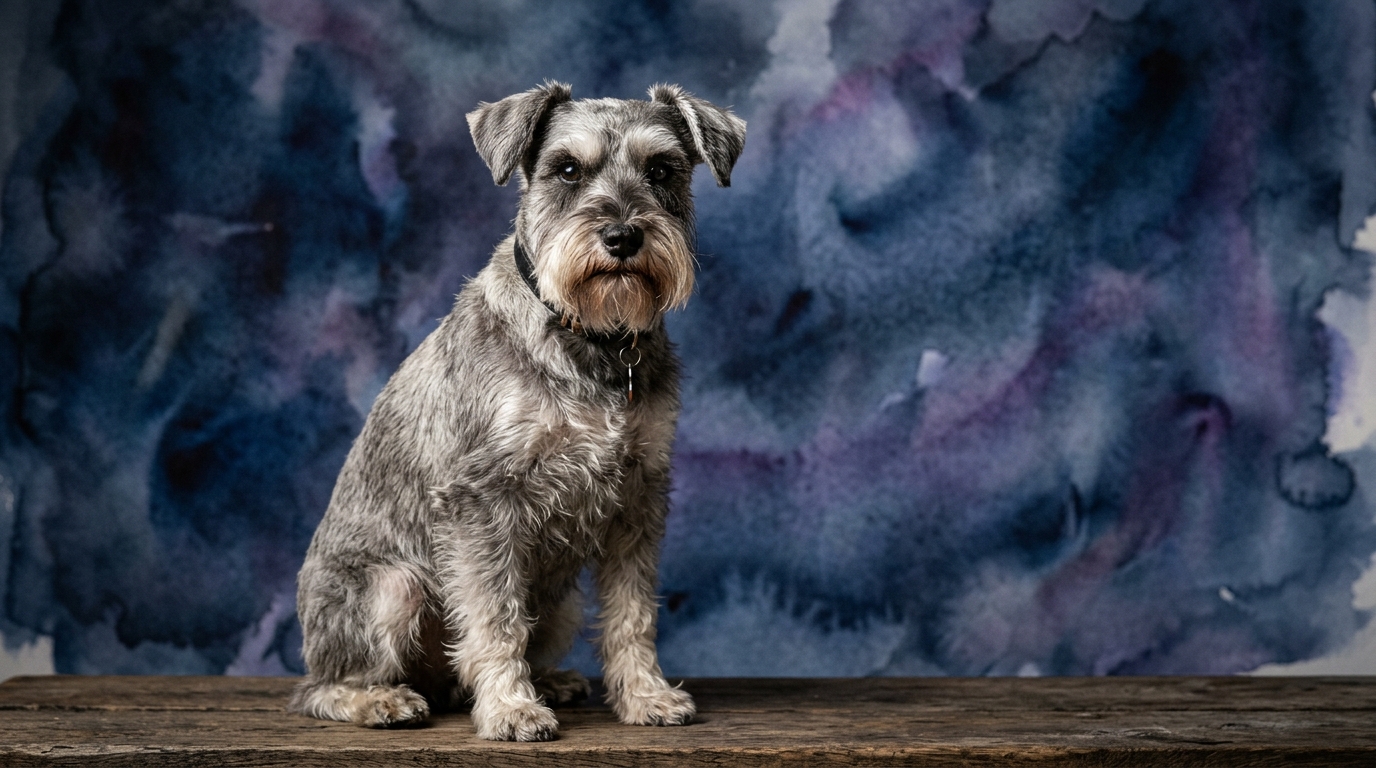
Miniature Schnauzer at a glance
| IQ Rank / Score | #12 |
|---|---|
| Trainability | ★★★★★ (5/5) |
| Social Intelligence | ★★★★☆ (4/5) |
| Lifespan | 12-16 years |
| Shedding | Low to moderate |
| Exercise Needs | High (60+ min/day + training) |
| Origin | Germany |
The Miniature Schnauzer: A Terrier with a Twist
Originating from 19th-century Germany, the Miniature Schnauzer was meticulously bred as a utilitarian farm dog, specializing in ratting and guarding. Their original mandate demanded sharp problem-solving skills and an independent spirit, characteristics deeply ingrained in the terrier lineage. However, unlike many of their fellow terriers, the Miniature Schnauzer possesses a remarkable capacity for obedience and partnership, a trait that sets them apart. This isn't just anecdotal; independent behavioral studies, like those conducted by Dr. Stanley Coren, place them remarkably high on the canine intelligence spectrum.
Dr. Coren’s extensive research, ranking 138 dog breeds based on obedience and working intelligence, positions the Miniature Schnauzer at an impressive #12. This top-tier placement is particularly significant because the Miniature Schnauzer is the only terrier breed that ranks in Coren's Top 15, a distinction largely attributed to historical breeding choices. Early breeders strategically crossed the robust Miniature Schnauzer with Poodles, a move that successfully infused the breed with an exceptional level of 'obedience intelligence' alongside their inherent terrier problem-solving capabilities. This deliberate genetic blend resulted in a dog that retains its determined independent streak while also embracing complex training and cooperative tasks with enthusiasm.
Their intelligence profile reflects this unique heritage: they score 4/5 in Problem Solving, demonstrating keen observational skills and strategic thinking. Their Training Speed is an outstanding 5/5, meaning they grasp new commands with impressive efficiency. Social Intelligence also ranks at 4/5, indicating a strong ability to read human cues and adapt to family dynamics. Furthermore, their Instinctive Drive, particularly for 'work,' is a robust 4/5, paired with a Memory score of 4/5, ensuring they retain learned behaviors and lessons over time. These combined traits paint a picture of a dog that is not only capable but exceptionally eager to engage and learn.
From Rat Catcher to Rapid Learner: Their Cognitive Strengths
The Miniature Schnauzer's ancestry as a tenacious vermin hunter means they possess a sharp, focused intellect. Their problem-solving prowess, rated at 4 out of 5, is evident in their strategic approach to challenges, whether it's figuring out how to retrieve a toy from under furniture or navigating a complex scent puzzle. This isn't just about raw brainpower; it's about practical application and a drive to complete tasks, a hallmark of their terrier pragmatism. They evaluate situations, make decisions, and execute plans with surprising efficiency, a direct echo of their rat-hunting days.
Where the Miniature Schnauzer truly shines for the modern pet owner is in their extraordinary training speed, scoring a perfect 5 out of 5. This rapid acquisition of new commands and tricks is a direct result of their Poodle influence, combining a desire to please with quick comprehension. They thrive on mental stimulation and excel in activities like agility, obedience trials, and even canine freestyle. Their solid memory, rated 4 out of 5, ensures that once a concept is learned, it's rarely forgotten, making them reliable and consistent companions. This combination of quick learning and strong retention makes them a joy to train and an ideal candidate for owners seeking an engaged and responsive partner.
Social Smarts and Adaptability
Beyond specific tasks, Miniature Schnauzers exhibit a notable social intelligence (4/5). They are adept at picking up on human emotions and routines, often adjusting their behavior to match the household's mood. This social awareness contributes to their reputation as excellent family dogs, capable of forming deep bonds and integrating smoothly into diverse living situations. Their size makes them adaptable to both apartments and larger homes, but their sharp minds demand consistent mental engagement, regardless of their physical environment.
Their adaptability, while not explicitly scored, is a composite of their high problem-solving, social intelligence, and learning speed. A Miniature Schnauzer isn't just good at learning commands; they are often quick to understand new house rules, adjust to new environments, and accept new family members, both human and animal. This flexibility, rooted in their keen observational skills and desire to understand their world, allows them to transition smoothly through life's changes, provided they receive appropriate guidance and mental stimulation.
3 At-Home Tests to Measure Your Miniature Schnauzer's IQ
These tests are adapted from peer-reviewed ethology research. No equipment is needed beyond items you have at home. Run each test 5–10 times for reliable results.
The Myth: "Schnauzers are stubborn terriers that resist training."
✅ The Miniature Schnauzer decidedly bucks this common terrier stereotype. Their unique genetic blend, including Poodle ancestry, has gifted them with an exceptional willingness to learn and an impressive training speed, ranking #12 in obedience among all breeds. They thrive on mental engagement and are often celebrated for their eagerness to please, making them highly trainable companions who quickly master new commands and tasks.
Miniature Schnauzer vs. Similar Breeds
🧠 What's Your Dog's IQ Score?
Our full Pet IQ Lab assessment includes 12+ tests across 5 cognitive dimensions, calibrated for Miniature Schnauzers specifically.
Take the Full IQ Test →Frequently Asked Questions
How smart is a Miniature Schnauzer?
Our Pet IQ Lab framework scores cognition across five dimensions (max 25). The Miniature Schnauzer totals 21/25 — very high for a domestic dog. The full article breaks down each dimension with at-home tests.
Are Miniature Schnauzers easy to train?
Miniature Schnauzers learn new cues very quickly — often in 5-15 repetitions. They score 5/5 on Training Speed in our breed profile.
Are Miniature Schnauzers good with children and other pets?
Yes — their Social Intelligence rates 4/5 in our Pet IQ Lab framework. With early socialization and supervised play, most Miniature Schnauzers integrate well into families with respectful children and other pets.
Do Miniature Schnauzers need a lot of mental stimulation?
Absolutely. With Problem Solving 4/5 and Instinctive Drive 4/5, Miniature Schnauzers need daily mental work — puzzle feeders, scent games, training sessions, or nose-work — to avoid boredom.
How much exercise does a Miniature Schnauzer need?
Miniature Schnauzers need active engagement. Plan for 45-60 minutes of exercise and training per day, plus mental stimulation.
How good is a Miniature Schnauzer's memory?
Miniature Schnauzers score 4/5 on memory. They remember routines, hiding spots, and learned cues for months, sometimes years.
What is the typical lifespan of a Miniature Schnauzer?
Miniature Schnauzers commonly live 12-16 years when kept at a healthy weight.
The Miniature Schnauzer is a testament to how selective breeding can hone and refine intelligence, creating a dog that's both a clever problem-solver and a highly trainable companion. Their unique blend of terrier tenacity and Poodle smarts makes them truly exceptional members of the canine world. Understanding their specific cognitive strengths allows us to truly appreciate and nurture the brilliant minds within these charismatic little dogs.