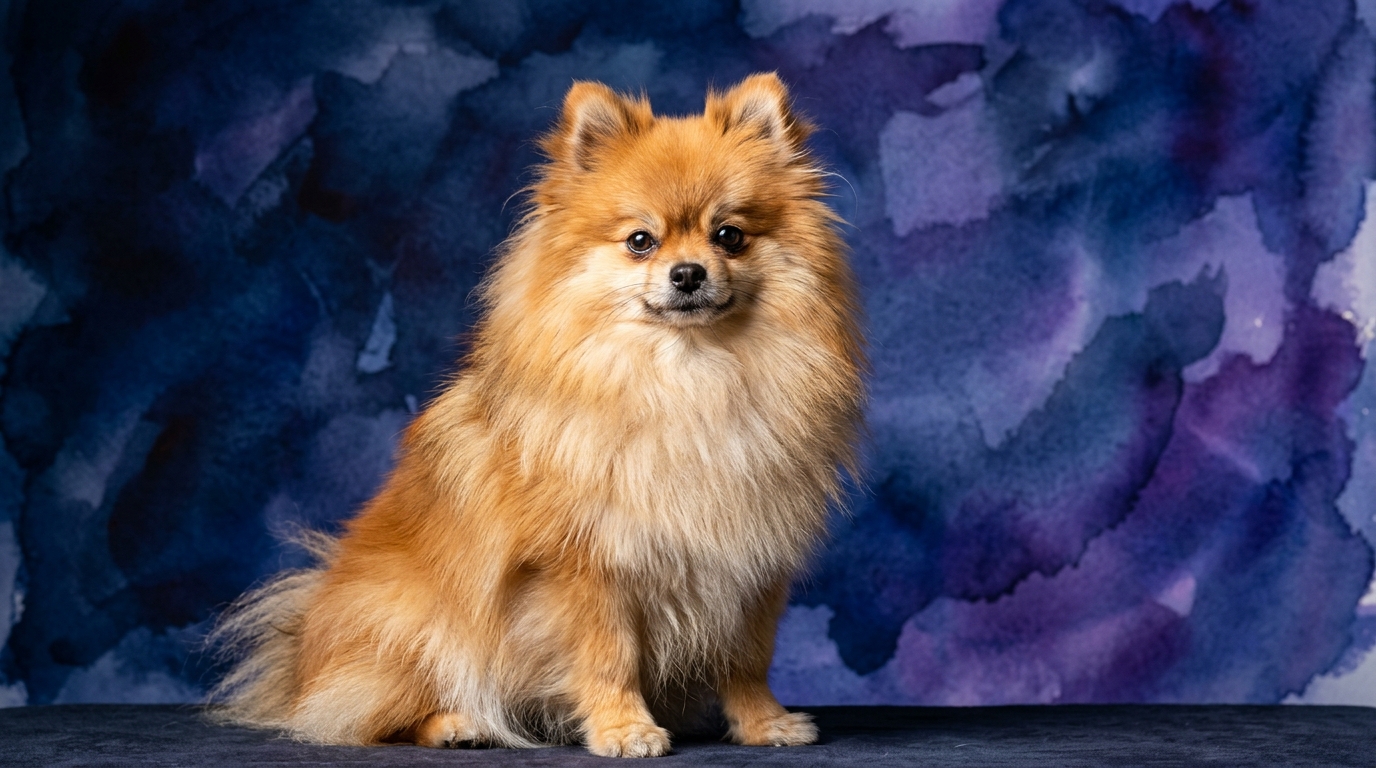
Pomeranian at a glance
| IQ Rank / Score | #23 |
|---|---|
| Trainability | ★★★★☆ (4/5) |
| Social Intelligence | ★★★★☆ (4/5) |
| Lifespan | 12-16 years |
| Shedding | Low to moderate |
| Exercise Needs | Moderate (30-45 min/day) |
| Origin | Poland/Germany (Pomerania) |
Beyond the Fluff: The Pomeranian's Surprising Cognitive Edge
For a breed categorized as 'Toy' and typically weighing a mere 3 kilograms, the Pomeranian packs a formidable cognitive punch. While their petite stature might lead some to underestimate their brainpower, our Pet IQ Lab analysis reveals a dog with significant problem-solving abilities, remarkable training speed, and impressive social intelligence. This isn't just a cute face; it's a thinking companion ready to engage.
Their intelligence isn't merely anecdotal; the Pomeranian ranks an impressive #23 out of 138 breeds in Stanley Coren's obedience-intelligence list, placing them among the top tiers of canine learners. This high ranking indicates a breed that understands new commands quickly and obeys them reliably, often on the first try. So, while they excel at being adorable, they're equally adept at mental challenges.
From Arctic Tundra to Living Room Lap: The Pomeranian's Ancient Smarts
To truly understand the Pomeranian's unique intelligence, we must look beyond their modern-day image and into their surprising history. Pomeranians descend directly from the Spitz family of sled dogs. Their ancestors pulled sleds in the Arctic — they still carry the cognitive wiring for independent navigation, a trait essential for survival in vast, challenging landscapes. This lineage isn't just a historical footnote; it profoundly shapes their cognitive profile, imparting a robust problem-solving capacity (rated 4/5 in our profile) and a solid instinctive drive (3/5).
Imagine a tiny dog whose very genes echo the need for independent decision-making and navigating complex environments. This ancestral legacy manifests today in a Pomeranian's tendency to assess situations, learn routes, and sometimes, develop a strong sense of direction on walks. This isn't just about following commands; it’s about understanding their world and interacting with it intelligently, traits passed down through generations from their arctic working dog forebears.
Brain in a Bite-Sized Package: Unpacking the Pomeranian Intelligence Profile
Our Pet IQ Lab dives deep into specific facets of canine cognition, and the Pomeranian consistently performs well across the board. Their Problem Solving ability is rated 4/5, indicating a dog capable of figuring out puzzles, overcoming obstacles, and adapting to new situations with thoughtful strategies. This isn't brute force; it's about cleverness.
Training Speed also scores 4/5 for Pomeranians, meaning they pick up new commands and routines with remarkable quickness. This makes them highly rewarding companions for owners interested in teaching tricks, advanced obedience, or even canine sports. Coupled with their 4/5 Social Intelligence, they are keenly attuned to human cues and social dynamics, making them excellent communicators and adaptable family members. Their Memory is also strong at 4/5, allowing them to retain learned behaviors and recognize familiar faces or places over long periods. While their Instinctive Drive is a respectable 3/5, reflecting their independent spirit, it's balanced by their desire to engage with their human companions.
The Social Butterfly and the Quick Learner: Training Your Pomeranian
A Pomeranian's high social intelligence means they are often very attuned to their human companions' moods and intentions. They can read body language and vocal tones with impressive accuracy, making them responsive and cooperative partners in training. This deep understanding of social cues allows them to form strong bonds and makes them eager to please, translating into faster learning curves.
Their 4/5 Training Speed means that with consistent, positive reinforcement, Pomeranians can master a wide array of commands and behaviors. From basic obedience like 'sit' and 'stay' to more complex tricks and even agility courses, their quick grasp of concepts makes training sessions engaging and productive. The key is to keep training fun and rewarding, tapping into their desire for interaction and mental stimulation.
The Pomeranian's Memory: Small Dog, Big Recall
The Pomeranian's excellent memory (4/5) is a significant advantage in training and daily life. They remember commands, routines, and specific locations, which aids in house training and helps them navigate their environment confidently. If you hide a favorite toy or treat, a Pomeranian is likely to remember where it was last seen, demonstrating their spatial memory.
This strong memory also extends to people and other animals. Pomeranians can form lasting impressions and remember individuals even after long absences. This trait contributes to their loyalty and the depth of their companionship, making them remember the positive interactions and training they've received.
3 At-Home Tests to Measure Your Pomeranian's IQ
These tests are adapted from peer-reviewed ethology research. No equipment is needed beyond items you have at home. Run each test 5–10 times for reliable results.
The Myth: "Pomeranians are divas with no real intelligence, just tricks for treats."
✅ The Pomeranian's sophisticated intelligence, rooted in their sled dog ancestry, goes far beyond mere treat-driven tricks. Their high problem-solving scores, rapid training acquisition, and strong memory demonstrate genuine cognitive depth and adaptability. While they certainly enjoy treats, their motivation for learning and interaction is complex and driven by an innate desire to engage and understand their environment, not just perform for food.
Pomeranian vs. Similar Breeds
🧠 What's Your Dog's IQ Score?
Our full Pet IQ Lab assessment includes 12+ tests across 5 cognitive dimensions, calibrated for Pomeranians specifically.
Take the Full IQ Test →Frequently Asked Questions
How smart is a Pomeranian?
Our Pet IQ Lab framework scores cognition across five dimensions (max 25). The Pomeranian totals 19/25 — very high for a domestic dog. The full article breaks down each dimension with at-home tests.
Are Pomeranians easy to train?
Pomeranians are generally easy to train when you use consistent, reward-based sessions. They score 4/5 on Training Speed in our breed profile.
Are Pomeranians good with children and other pets?
Yes — their Social Intelligence rates 4/5 in our Pet IQ Lab framework. With early socialization and supervised play, most Pomeranians integrate well into families with respectful children and other pets.
Do Pomeranians need a lot of mental stimulation?
Absolutely. With Problem Solving 4/5 and Instinctive Drive 3/5, Pomeranians need daily mental work — puzzle feeders, scent games, training sessions, or nose-work — to avoid boredom.
How much exercise does a Pomeranian need?
Pomeranians do well with 20-40 minutes of daily walks and play plus a few short training moments.
How good is a Pomeranian's memory?
Pomeranians score 4/5 on memory. They remember routines, hiding spots, and learned cues for months, sometimes years.
What is the typical lifespan of a Pomeranian?
Pomeranians commonly live 12-16 years when kept at a healthy weight.
The Pomeranian truly shatters expectations, proving that profound intelligence comes in all sizes. From their arctic heritage to their keen social awareness, these fluffy companions are far more than just pretty faces; they are astute thinkers ready to surprise and delight with their cognitive prowess.