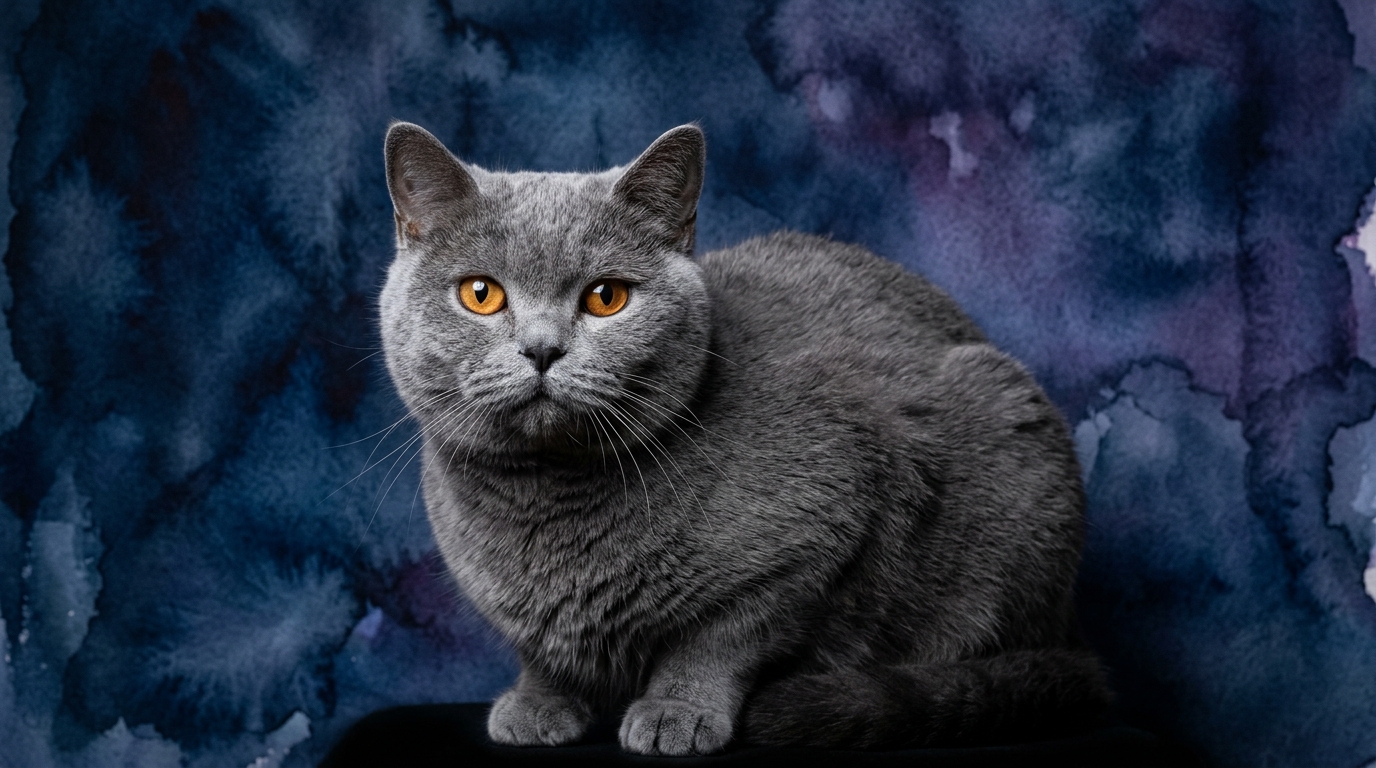
British Shorthair at a glance
| IQ Rank / Score | 15/25 |
|---|---|
| Trainability | ★★★☆☆ (3/5) |
| Social Intelligence | ★★★☆☆ (3/5) |
| Lifespan | 12-16 years |
| Shedding | Moderate to high |
| Exercise Needs | Moderate (20-40 min play/day) |
| Origin | England |
The British Shorthair's 'Steady-State' Intelligence: A Profile in Consistency
When we talk about intelligence in cats, it's easy to get caught up in flashy tricks or lightning-fast learning. But for the British Shorthair, their cognitive brilliance lies in consistency and emotional stability – a true 'steady-state' intelligence. These cats aren't about rapid-fire acquisition of new skills, but rather about endurance learning, building deep, reliable understanding over time. Think of it as a deep, calm river flowing rather than a gushing waterfall; both powerful, but in different ways.
This breed's cognitive profile reflects a balanced mind, demonstrating a 3 out of 5 across key intelligence dimensions: Problem Solving, Training Speed, Social Intelligence, Instinctive Drive, and Memory. This isn't a mediocre score; it signifies a well-rounded, dependable intellect. Owners frequently report a sense of predictability and calm logic in their British Shorthairs, making them exceptional companions whose responses are rarely impulsive or erratic. They assess situations, learn enduring lessons, and apply them with a serene deliberateness.
Their steady approach means they might not master a complex trick in a single session, but once learned, that knowledge is deeply ingrained and rarely forgotten. This endurance learning style contributes significantly to their famous calm demeanor, as they are less prone to anxiety from novel situations, preferring to observe and understand before acting.
A Legacy of Resilience: The Roots of British Shorthair Cognition
The British Shorthair's composed and intelligent nature is not merely a quirk of the breed; it's a testament to a long, robust evolutionary history. The British Shorthair is believed to be the oldest identifiable cat breed in Britain — descended from cats brought by the Romans and crossed with European wildcats. Their genetic resilience is directly tied to this diverse ancestry, fostering a lineage of robust health and an adaptable, stable temperament that has served them well through centuries. This deep historical root contributes to their enduring cognitive and emotional stability.
Their origins speak to a breed built for survival and adaptation, not just aesthetic appeal. These were cats that needed to problem-solve for sustenance, integrate into various human settlements, and navigate diverse environments. This deep-seated resilience manifests today as a cat that handles change with grace, processes new information methodically, and develops a strong, lasting bond with its human family, built on trust and consistent interaction. They are observers and thinkers, quietly absorbing their world.
Decoding the British Shorthair Mind: What Their Intelligence Means For You
Understanding your British Shorthair's unique cognitive profile helps you tailor your interactions and training. Their steady problem-solving abilities (3/5) mean they excel at puzzles that require contemplation rather than speed. They might not immediately bat at a treat puzzle, but they will methodically work it out. Their training speed (3/5) indicates that consistent, positive reinforcement over several sessions will yield lasting results, rather than expecting instant mastery. Repetition and patience are your best tools.
Social intelligence (3/5) in a British Shorthair manifests as a deep, quiet connection. They understand routines, human emotions, and social cues without needing constant physical contact. Their memory (3/5) ensures they recall past experiences, both positive and negative, shaping their future behaviors and reinforcing their trust in you. Finally, their instinctive drive (3/5) is well-balanced; they retain natural hunting instincts, but these are typically managed and expressed in playful, rather than destructive, ways within a home environment.
3 At-Home Tests to Measure Your British Shorthair's IQ
These tests are adapted from peer-reviewed ethology research. No equipment is needed beyond items you have at home. Run each test 5–10 times for reliable results.
The Myth: "British Shorthairs are standoffish and emotionally limited because they don't seek lap time."
✅ British Shorthairs express affection differently; they prefer to be close by, following you from room to room or sitting next to you on the sofa. Their consistent presence, soft head-butts, and purring demonstrate a deep, stable emotional bond, just not always in the form of direct lap-sitting. They are profoundly attached and emotionally stable companions.
British Shorthair vs. Similar Breeds
🧠 What's Your Cat's IQ Score?
Our full Pet IQ Lab assessment includes 12+ tests across 5 cognitive dimensions, calibrated for British Shorthairs specifically.
Take the Full IQ Test →Frequently Asked Questions
How smart is a British Shorthair?
Our Pet IQ Lab framework scores cognition across five dimensions (max 25). The British Shorthair totals 15/25 — above-average for a domestic cat. The full article breaks down each dimension with at-home tests.
Are British Shorthairs easy to train?
British Shorthairs can learn most cues, but expect to repeat lessons and keep sessions short. They score 3/5 on Training Speed in our breed profile.
Are British Shorthairs good with children and other pets?
British Shorthairs can live well with families when socialized early. Their Social Intelligence scores 3/5, so supervise interactions with small children and introduce new pets gradually.
Do British Shorthairs need a lot of mental stimulation?
British Shorthairs benefit from 10-15 minutes of focused enrichment a day: food puzzles, short training drills, or novel toys rotated weekly.
How much exercise does a British Shorthair need?
British Shorthairs do well with 20-40 minutes of interactive play plus a few short training moments.
How good is a British Shorthair's memory?
British Shorthairs score 3/5 on memory. They remember high-value associations well; less-used cues fade without refresher sessions.
What is the typical lifespan of a British Shorthair?
Most British Shorthairs live 12-16 years with good veterinary care, quality diet, and indoor living.
The British Shorthair’s intelligence is a quiet force, defined by stability, consistency, and a profound capacity for endurance learning. These are not merely pets; they are thoughtful, reliable companions whose calm wisdom enriches every home they grace.